Naphcon-A and Opcon-A at a Glance
| Product | Active ingredients | Labeled purpose | Manufacturer |
|---|---|---|---|
| Naphcon-A | Naphazoline hydrochloride 0.025% and pheniramine maleate 0.3% | Redness reliever and antihistamine | Alcon |
| Opcon-A | Naphazoline hydrochloride 0.02675% and pheniramine maleate 0.315% | Redness reliever and antihistamine | Bausch + Lomb |
Both products are labeled to temporarily relieve itching and redness associated with pollen, ragweed, grass, animal hair and dander. Their Drug Facts labels direct adults and children six years of age and older to instill one or two drops in the affected eye or eyes up to four times daily. A doctor should be consulted before use in children under six.
What Is Naphcon-A?
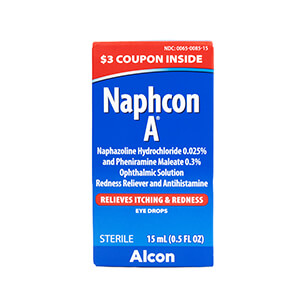
Naphcon-A is an over-the-counter ophthalmic solution manufactured by Alcon. It combines two active ingredients:
- Naphazoline hydrochloride 0.025%, identified on the label as a redness reliever
- Pheniramine maleate 0.3%, an antihistamine
The product is labeled for temporary relief of redness and itching caused by ragweed, pollen, grass, animal dander and hair.
Naphcon-A contains benzalkonium chloride and should not be used while contact lenses are in the eyes. Its Drug Facts label instructs users to remove contact lenses before applying the drops.
What Is Opcon-A?
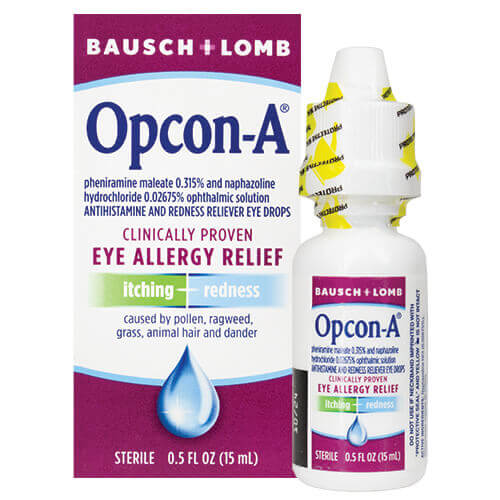
Opcon-A is an over-the-counter ophthalmic solution from Bausch + Lomb. Its active ingredients are:
- Naphazoline hydrochloride 0.02675%, identified on the label as a redness reliever
- Pheniramine maleate 0.315%, an antihistamine
Opcon-A is also labeled for temporary relief of itching and redness caused by pollen, ragweed, grass, animal hair and dander.
Like Naphcon-A, Opcon-A contains benzalkonium chloride. Its Drug Facts label also directs users to remove contact lenses before applying the drops.
Are Naphcon-A and Opcon-A the Same?
Naphcon-A and Opcon-A use the same two types of active ingredients for the same labeled purposes, but they are not identical formulations.
The products contain slightly different concentrations of naphazoline hydrochloride and pheniramine maleate. Their inactive-ingredient lists also differ. For example, the current Opcon-A label includes hypromellose among its inactive ingredients, while the current Naphcon-A label does not.
For practices comparing these products, the most accurate conclusion is that they are similar combination allergy eye drops—not identical products.
Packaging, availability and product labeling can change. Eye-care professionals should consult the current Drug Facts label when evaluating or discussing either option.
What Does Each Active Ingredient Do?
Naphazoline hydrochloride
Naphazoline hydrochloride is identified on both product labels as a redness reliever. Its role in these combination drops is to provide temporary relief from eye redness.
Because overuse may cause increased redness, both products’ labels warn users not to exceed the labeled directions.
Pheniramine maleate
Pheniramine maleate is an antihistamine. It helps address itching associated with exposure to allergens such as pollen, ragweed, grass, animal hair and dander.
The combination of an antihistamine and a redness reliever allows these products to address two common allergy-related complaints: itching and redness.
Important Label Considerations
Although Naphcon-A and Opcon-A are available without a prescription, their Drug Facts labels contain several important warnings.
Patients should ask a doctor before using either product if they have:
- Narrow-angle glaucoma
- Heart disease
- High blood pressure
- Trouble urinating
The labels also advise users to stop use and consult a doctor if they experience eye pain, changes in vision, or redness or irritation that worsens or lasts longer than 72 hours.
Temporary pupil enlargement may occur. The Naphcon-A label notes that this can cause light sensitivity, while the Opcon-A label states that users may experience brief tingling after application.
Both labels warn that accidental ingestion by infants and children can have serious consequences. Products should be stored securely and kept out of children’s reach.
Contact-Lens Considerations
Contact lenses should be removed before using either Naphcon-A or Opcon-A.
This is an especially important counseling point during allergy season, when contact-lens wearers may reach for an OTC eye drop without first checking whether it is appropriate for use with their lenses.
Neither product should be presented as a contact-lens rewetting drop. Patients should follow the product label and the recommendations of their eye-care professional concerning lens removal, drop use and when lenses may be reinserted.
How Do These Products Differ From Artificial Tears?
Naphcon-A and Opcon-A are combination antihistamine and redness-relief products. Artificial tears belong to a different category and are generally intended to lubricate the ocular surface or provide temporary relief from dryness and irritation.
The categories should not be treated as interchangeable:
- Naphcon-A and Opcon-A combine an antihistamine with a redness reliever and are labeled for temporary relief of allergy-related itching and redness.
- Artificial tears are lubricating products with formulations and labeled uses that vary by product.
- Contact-lens rewetting drops are specifically formulated and labeled for use with designated types of contact lenses.
When patients report itchy, red or watery eyes, product selection should reflect their symptoms, ocular history, contact-lens use and the directions and warnings on the individual product label.
Preparing for Fall Eye-Allergy Questions
Fall allergy season creates an opportunity for practices to review both their product inventory and their patient-education materials.
Practices may want to verify:
- Which OTC allergy eye drops are currently available
- The active ingredients and concentrations in each product
- Whether products contain preservatives
- Contact-lens instructions
- Age-related directions
- Warnings and conditions requiring consultation
- Whether staff can clearly distinguish allergy drops from artificial tears and contact-lens rewetting drops
A concise understanding of these distinctions can help the practice respond consistently when patients ask about familiar products such as Naphcon-A and Opcon-A.
Frequently Asked Questions
What is Naphcon-A used for?
Naphcon-A is labeled for the temporary relief of eye redness and itching caused by ragweed, pollen, grass, animal dander and hair. It combines naphazoline hydrochloride, a redness reliever, with pheniramine maleate, an antihistamine.
What is Opcon-A used for?
Opcon-A is labeled to temporarily relieve itching and redness caused by pollen, ragweed, grass, animal hair and dander. It also combines naphazoline hydrochloride with pheniramine maleate.
Is Opcon-A the same as Naphcon-A?
The products use the same types of active ingredients and have similar labeled uses, but they are not identical. Their active-ingredient concentrations and inactive-ingredient lists differ.
Do Naphcon-A and Opcon-A contain antihistamines?
Yes. Both contain pheniramine maleate, which is identified on their labels as an antihistamine.
Can Naphcon-A or Opcon-A be used with contact lenses?
Both labels instruct users to remove contact lenses before applying the drops. Neither product should be treated as a contact-lens rewetting drop.
Can these drops be used every day?
The labels permit use up to four times daily for adults and children six years of age and older, but they also warn that overuse may cause increased redness. If redness or irritation worsens or continues for more than 72 hours, the labels direct users to stop use and consult a doctor.
Review Current Allergy-Relief Options
Amcon supplies eye-care practices with ophthalmic products for seasonal and year-round patient needs. Browse our Eye Allergy Relief category to find more options.
This article is intended as a product-reference resource for eye-care professionals. It does not replace the complete Drug Facts label, clinical judgment or individualized patient care. Always consult the current product labeling for ingredients, directions, warnings and other information.